
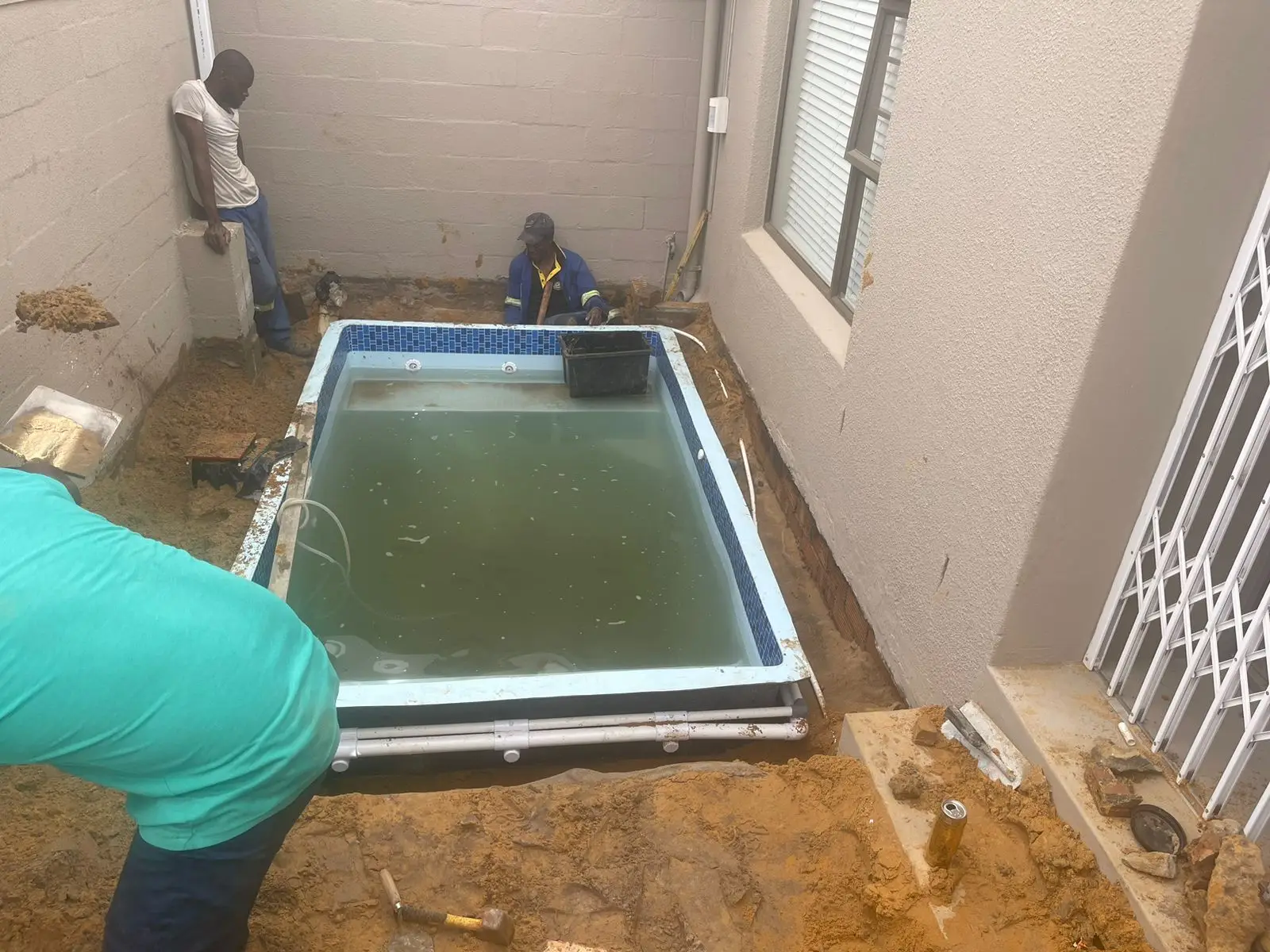
If you’ve noticed your swimming pool water level dropping faster than usual, you’re probably asking yourself whether something is seriously wrong. The truth is, pool water loss is one of the most frequently reported concerns among pool owners across Cape Town — from the Atlantic Seaboard to the Southern Suburbs and everywhere in between. Sometimes the explanation is completely harmless. Other times, it points to a genuine swimming pool leak that needs professional attention before it becomes a far more expensive headache.
Understanding what’s actually happening with your pool is the first step toward fixing it. This guide covers everything you need to know about why your pool might be losing water, how to tell the difference between normal loss and a real problem, and when it’s time to call in a specialist for pool leak repair in Cape Town.
The First Question You Need to Answer: Leak or Evaporation?
Before anything else, it’s worth knowing that not all water loss signals a swimming pool leak. In Cape Town’s warm, dry summers — particularly in areas like Constantia, Hout Bay, and the Northern Suburbs — evaporation alone can account for a meaningful drop in your pool’s water level. On a hot, windy day, a pool can lose anywhere between 2mm and 7mm of water purely through evaporation. Over the course of a week, that’s enough to look alarming if you’re not expecting it.
The problem is that evaporation and an actual leak can look identical from the surface. Your water level drops, you top it up, and the cycle repeats. Many pool owners spend months adding water and money without ever investigating whether something more serious is going on underneath.
The most reliable way to separate normal evaporation from a genuine swimming pool leak is the bucket test, and it costs you nothing to try. Fill a standard bucket with pool water and set it on one of your pool steps so it’s partially submerged. Mark the water level inside the bucket and on the outside pool wall with a piece of tape or a waterproof marker. Leave everything for 24 to 48 hours without running the pump and without topping the pool up. When you come back, compare how much each level has dropped. If the pool has lost noticeably more water than the bucket, you almost certainly have a leak that needs investigating. If both levels dropped by roughly the same amount, evaporation is likely the culprit and your pool is probably fine.
Structural Cracks in the Pool Shell
One of the more serious — though thankfully not always catastrophic — causes of pool water loss is cracking in the pool shell itself. Cape Town’s variable soil conditions, especially in areas with clay-heavy ground like parts of the Southern Suburbs and Somerset West, can contribute to ground movement that places stress on a pool’s structure over time. Tree roots from nearby established garden trees are another common offender, gradually pushing against the pool shell until something gives.
When a crack develops in the shell, water seeps through continuously, often at a rate that’s significant enough to noticeably lower the water level over a matter of days. What makes structural leaks particularly tricky is that the water doesn’t always pool visibly on the surface. Instead, it migrates through the surrounding soil, which means you might not see any obvious signs of a problem at ground level until the situation has been going on for quite some time.
The signs worth looking for include visible cracks along the pool walls, floor, or steps, soft or consistently wet ground around the perimeter of the pool, and water loss that continues even when your pump and filtration system are completely switched off. That last point is especially telling — if your pool is losing water regardless of whether the pump is running, the leak is almost certainly in the shell or a fitting rather than in the plumbing system.
Smaller surface cracks can sometimes be addressed with underwater pool putty or epoxy compounds, but larger or deeper fractures require professional assessment. In more serious cases, the repair might involve replastering, fibreglass resurfacing, or structural reinforcement — all of which a qualified Cape Town pool repair specialist can evaluate properly.
Underground Plumbing Failures
Your pool’s plumbing system does the essential work of circulating water from the pool to the pump, through the filter, and back again. Most of these pipes run underground and completely out of sight, which means that when something goes wrong, the evidence isn’t always obvious above the surface. A crack in a buried pipe, a deteriorating joint, or a failing valve can allow water to escape into the surrounding soil without you ever seeing a drop.
Plumbing leaks have a distinguishing characteristic that helps separate them from structural issues: the water loss tends to be noticeably worse when the pump is running, because the system is under pressure. If you observe that your pool seems to drop faster during the day when the circulation is active compared to overnight when everything is off, that pattern strongly suggests a plumbing-related swimming pool leak rather than a crack in the shell.
Other signs that point toward a plumbing problem include persistent air bubbles entering the pool through the return jets, the ground around your pump and filter room feeling consistently damp or soggy, or an unexplained spike in your municipal water usage if you’re using mains water to keep the pool topped up.
Diagnosing underground plumbing leaks with any precision requires pressure testing — a process where sections of pipework are isolated and pressurised to identify exactly where the integrity of the system breaks down. This is specialist work that a professional pool leak detection service in Cape Town will carry out using dedicated equipment, and it’s far preferable to guesswork excavation that could cause more damage than it solves.
Leaking Fittings, Skimmers, and Returns
Every swimming pool has a series of fittings that penetrate the pool wall — skimmer boxes, return jets, main drains, underwater lights, and hydrostatic relief valves among them. Each of these penetrations is a potential point of failure, particularly as a pool ages and the sealants, gaskets, and fittings themselves begin to deteriorate with ongoing exposure to chlorinated water, UV light, and the general wear and tear of regular use.
Skimmer leaks deserve special mention because they’re among the most common sources of water loss in residential pools across Cape Town. The skimmer is the fitting built into the side of the pool that draws surface water into the filtration system. The joint between the skimmer housing and the pool shell can crack over time, creating a pathway for water to escape. A revealing clue that your skimmer may be the source of a problem is if your pool’s water loss appears to slow down or stop entirely once the water level has dropped to just below the skimmer opening — effectively cutting off the leak point from the water above.
Return jets, underwater light niches, and other wall fittings can develop similar problems as the rubber gaskets and sealants behind them fail. The fix for fitting leaks ranges from simple gasket replacement and re-sealing with pool-grade sealant to complete fitting replacement, depending on the extent of the damage. What’s important is having the correct fitting identified and properly assessed, because a poorly executed DIY repair on a fitting leak can sometimes make the situation worse.
Equipment Room and Mechanical Leaks
The pump, filter tank, chlorinator, heater, and all of the associated pipework in your pool’s equipment room represent another category of water loss that’s often overlooked simply because it’s not the pool itself that’s visibly losing water. A dripping union connection, a cracked filter housing, a worn pump lid o-ring, or a loose pressure gauge fitting can all allow water to escape steadily during the pump’s operating cycle.
These leaks tend to be easier to spot than underground or structural issues because the equipment room is an enclosed, accessible space. Running your eye carefully over all the connections and fittings while the pump is operating will often reveal the culprit — look for dripping water, damp patches on the ground, mineral deposits or white staining that indicate dried water residue, or any fittings that feel loose when you handle them.
Many equipment room leaks are resolved quickly and at relatively low cost once they’re identified. An o-ring replacement or re-tightening of a union fitting might be all that’s needed. However, a cracked filter tank or a failing heat exchanger in a pool heater represents a more significant repair or replacement decision, and getting a professional opinion on the cost-effectiveness of repair versus replacement is always worthwhile.
How Professional Pool Leak Detection Works in Cape Town
If you’ve worked through the obvious possibilities and still can’t locate the source of your pool’s water loss, professional leak detection is the logical next step. Reputable pool leak detection services in Cape Town use a combination of tested methodologies to find leaks accurately and with minimal disruption to your property.
Pressure testing is the standard approach for investigating plumbing systems. Individual pipe runs are isolated and tested under controlled pressure while a technician monitors for pressure drops that indicate a breach somewhere along the line. It’s methodical and precise, and it eliminates the need for exploratory digging that could cause unnecessary damage to your garden or pool surrounds.
Dye testing is used to investigate specific suspected leak points — cracks in the shell, fittings, or other structural features. A small amount of coloured dye is released carefully near the area in question while the water is kept as still as possible. If water is escaping through that point, the dye will visibly be drawn toward and through the breach, confirming the location of the leak with clear visual evidence.
For leaks that are deeper underground or less accessible by visual means, electronic listening equipment can detect the acoustic signature of water escaping through a pipe or crack. This technology allows technicians to pinpoint the source of a plumbing leak without any excavation at all in many cases — something that’s particularly valuable in Cape Town properties where beautifully landscaped gardens are a priority.
When You Shouldn’t Wait to Call for Help
There’s a temptation to keep topping the pool up and hoping the problem resolves itself, particularly if the water loss seems manageable day to day. The reality is that delaying pool leak repair in Cape Town almost always leads to a more expensive outcome. A slow structural leak that goes unaddressed for months can undermine the soil beneath and around the pool, leading to progressive settlement and worsening structural damage. A plumbing leak left unchecked erodes surrounding soil and can eventually cause pipe collapse or ground subsidence near your pool equipment.
You should make contact with a pool leak repair professional when the bucket test confirms that your pool is losing water beyond what evaporation accounts for, when you notice consistently wet ground around the pool or equipment area, when air bubbles are appearing persistently in your return jets, when the water loss is significant enough that you’re topping up more than 25mm per week, or when you can see visible cracking in the pool shell or fittings. Any one of these signs warrants professional investigation rather than a watch-and-wait approach.
Keeping Your Pool in Good Condition Year-Round
The best way to manage the risk of swimming pool leaks is through consistent, proactive maintenance. Having a qualified technician inspect your pool annually — checking fittings, gaskets, the shell condition, and all equipment — catches deterioration before it reaches the point of causing significant water loss. Cape Town pool owners who stay on top of minor maintenance issues consistently avoid the larger, more disruptive repairs that come from letting small problems compound over time.
A quality pool cover is also one of the most effective and underutilised tools available to pool owners. In addition to dramatically reducing evaporation — which is genuinely significant in Cape Town’s hot, dry summers — a cover protects the pool surface, reduces chemical consumption, and keeps debris out. Over the course of a year, the water and chemical savings alone often justify the investment.
Final Thoughts
Pool water loss is rarely something to dismiss, but it’s also not always the crisis it can feel like when you first notice it. The key is knowing how to assess what you’re actually dealing with — starting with the bucket test, checking the obvious points of failure, and calling in professional help when the source isn’t clear or the problem is beyond straightforward DIY repair.
For Cape Town pool owners dealing with persistent water loss, the combination of the city’s warm climate, varied soil conditions, and the natural ageing of pool infrastructure means that swimming pool leaks are a when rather than an if for many pools. Catching them early and repairing them properly is always the most cost-effective approach.
If your pool is losing water and you’re not sure why, don’t keep topping it up and hoping for the best. Get a proper diagnosis from an experienced pool leak detection and repair specialist in Cape Town, and deal with it once — the right way.
Worried your pool might have a leak? Contact our Cape Town pool leak repair team today for expert detection and repair services. We service pools across the Atlantic Seaboard, Southern Suburbs, Northern Suburbs, and beyond.
https://shorturl.fm/NfHS6
https://shorturl.fm/Dwon7
https://shorturl.fm/PFCOn
https://shorturl.fm/zzvqF