
A Professional Insight from Ocean Pools Group
When structural or surface issues arise in a fiberglass pool, addressing them effectively requires understanding the two main solutions: pool relining and pool reinstallation. Pool relining focuses on restoring the interior surface, repairing minor cracks, and renewing the gelcoat and waterproofing of the existing shell. This process is ideal when the pool’s structure is sound but the surface shows signs of wear, ageing, or minor damage.
Pool reinstallation, on the other hand, is a more extensive solution that addresses underlying structural or ground-level problems. It involves lifting or repositioning the pool shell, reconstructing the base, and correcting issues like soil movement, drainage failure, or hydrostatic pressure. Both processes require a professional assessment to determine the most suitable approach, ensuring the longevity, safety, and performance of the pool while protecting your investment.
Let’s break it down professionally.
Understanding Fibreglass Pool Relining
Before jumping to full pool removal or costly replacement, many ageing or damaged pools can be successfully restored through professional fiberglass pool relining services in Cape Town. Relining is often the smartest and most cost-effective solution when the pool shell is structurally intact but the interior surface has deteriorated. Instead of replacing the entire structure, relining focuses on renewing and reinforcing the existing fiberglass shell, extending its lifespan and restoring its appearance.
Over time, exposure to UV rays, pool chemicals, salt air (especially in coastal areas), and normal wear and tear can cause the gelcoat surface to fade, blister, crack, or delaminate. You may notice rough patches, chalky residue, black spots, staining, or even small surface fractures. While these issues may initially appear cosmetic, they can gradually compromise the waterproof barrier of the pool if left untreated.
What Is Pool Relining?
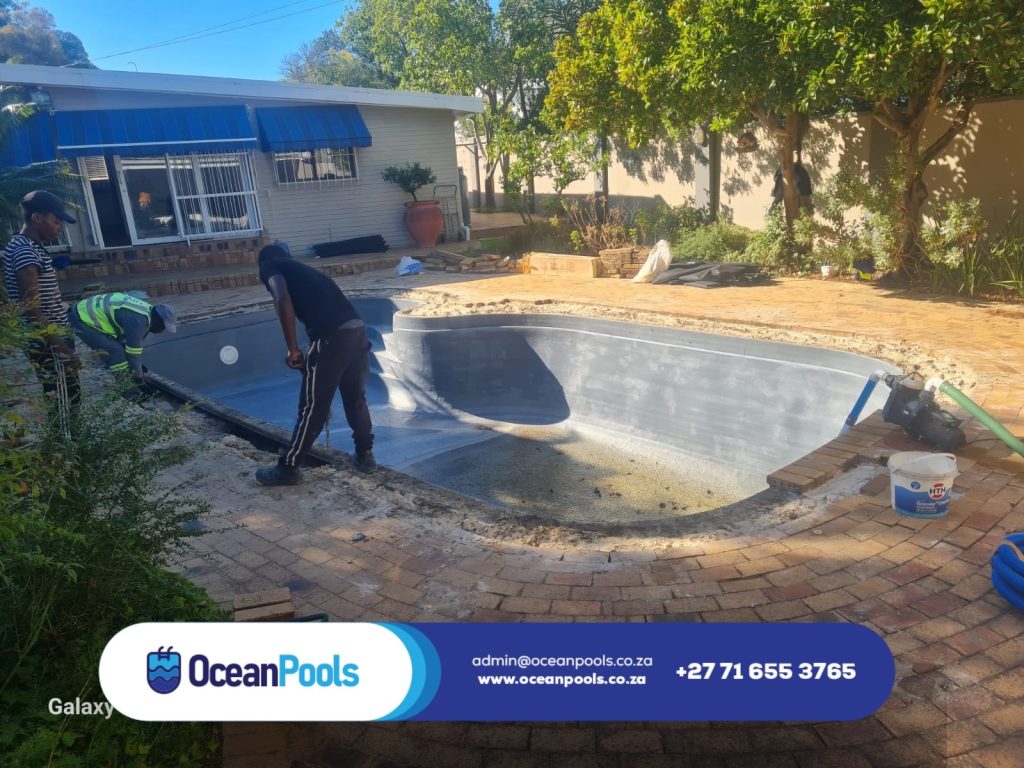
Pool relining is a professional resurfacing process that restores the interior surface of a fibreglass pool while reinforcing its structural strength and waterproofing capability. It involves carefully preparing the existing shell, repairing any damaged or weakened areas, and applying new layers of fibreglass and protective gelcoat to create a fresh, smooth, durable finish.
The process typically includes:
- Draining the pool under controlled conditions
- Grinding and sanding the old gelcoat to create proper bonding
- Removing any delaminated or weakened fibreglass sections
- Repairing cracks or structural stress points
- Applying new fibreglass mat layers with high-grade resin
- Allowing proper curing time
- Finishing with a new gelcoat surface
- Polishing and sealing for a smooth, long-lasting finish
The result is essentially a renewed interior surface that looks and performs like new, without the cost and disruption of replacing the entire pool. In coastal areas like Cape Town, relining is especially valuable because salt exposure, humidity, and strong UV conditions can accelerate surface degradation. A professionally relined pool not only improves aesthetics but also strengthens the shell against future environmental stress.
When done correctly, fiberglass pool relining can extend the life of your pool by 10–15 years or more, making it a practical long-term investment for homeowners who want to restore their pool without major structural reconstruction.
Why Coastal Pools Require Extra Care
Living near the ocean in Cape Town offers unmatched views and a relaxed lifestyle, but it also creates one of the harshest environments for swimming pools. Ocean-adjacent pools are constantly exposed to elements that accelerate wear and structural deterioration. Unlike inland pools, coastal pools must withstand salt-heavy air, powerful seasonal winds, persistent humidity, and abrasive sand particles. Without the right materials and installation methods, this environment can significantly shorten a pool’s lifespan.
Salt-Laden Air
One of the biggest threats to coastal pools is salt carried in the air. Even if your pool is not a saltwater system, microscopic salt particles from the ocean travel inland through wind and moisture. These particles settle on metal surfaces and attract water, creating the perfect conditions for corrosion. Over time, salt exposure can cause rusting on handrails, ladders, pump casings, light fittings, screws, and structural brackets. If not properly managed, corrosion can spread beneath surfaces and weaken essential components.
Strong Coastal Winds
Cape Town’s well-known winds, particularly during summer months, bring more than just a breeze. They carry sand, debris, and salt spray that constantly impact pool surfaces and equipment. Wind-driven sand can cause micro-abrasions on fibreglass finishes, dulling the surface and gradually wearing down the protective gelcoat layer. Increased debris also puts additional strain on filtration systems, requiring more frequent cleaning and maintenance.
High Humidity Levels
Coastal humidity intensifies corrosion and material breakdown. When moisture lingers in the air, it speeds up oxidation processes, especially when combined with salt particles. Electrical components, pump motors, and heating systems are particularly vulnerable in humid conditions. Without protective measures, internal components can deteriorate faster than expected.
Sand Abrasion
Fine sand carried by wind often settles in and around pool areas. While it may seem harmless, sand acts like a mild abrasive when circulated through filtration systems or brushed across pool surfaces. Over time, this can contribute to surface dullness and premature wear on equipment such as pumps and filters.

Understanding Fibreglass Pool Reinstallation
Before deciding to completely replace a swimming pool, many structural issues can be resolved through professional fiberglass pool relining before considering reinstallation. While it’s not as common as relining, reinstallation becomes necessary when the pool shell itself is still usable, but the surrounding structure, base, or underground systems have failed. Pool reinstallation involves carefully removing (or lifting) the existing fiberglass shell, correcting underlying structural or ground-related problems, and then reinstalling the pool using proper engineering methods.
Rather than demolishing and starting from scratch, this process restores stability while preserving the original shell, when it is still structurally sound. In coastal areas like Cape Town, where soil movement, groundwater pressure, and improper original installation are common causes of failure, reinstallation can be a cost-effective and practical solution.
What Is Fibreglass Pool Reinstallation?
Fiberglass pool reinstallation is a technical construction process that involves lifting or removing the pool shell, repairing or rebuilding the base and support system, and reinstalling the shell correctly to restore structural integrity. When done correctly, with proper base preparation, pressure balancing, and drainage planning, reinstallation is a precision engineering process designed to restore stability and extend the life of your swimming pool. While it is more complex than relining, it provides a powerful alternative to full replacement when underlying structural problems are the root cause.
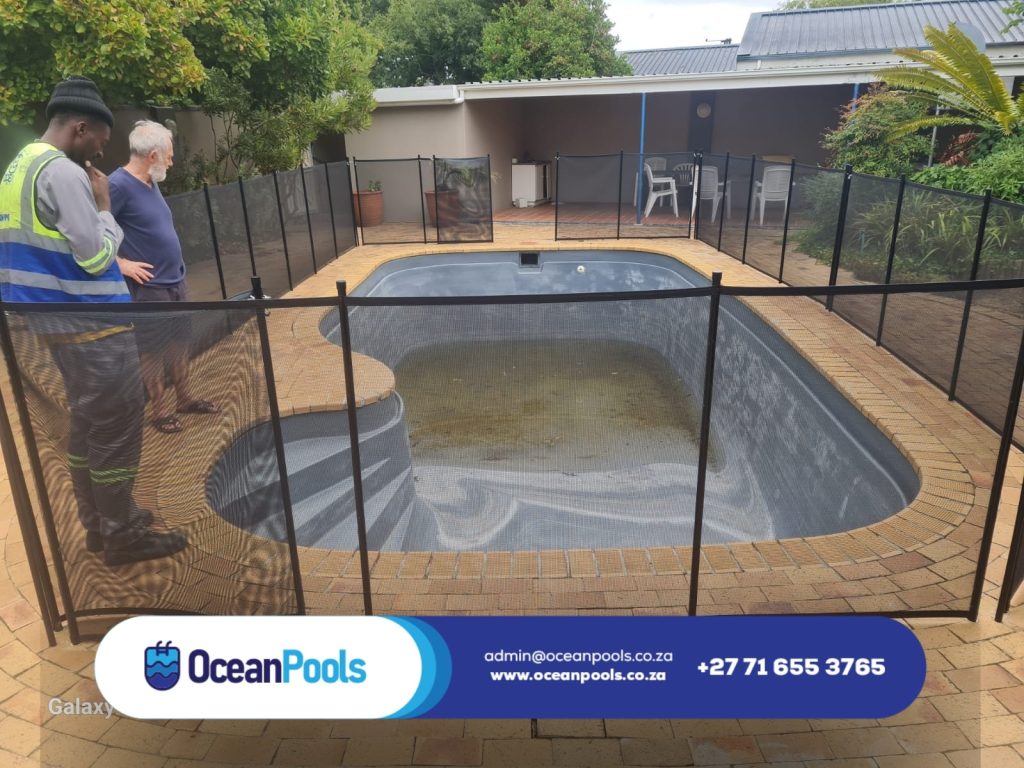
Before committing to fiberglass pool reinstallation, a thorough professional assessment is absolutely essential. Reinstallation is a major structural process and in many cases, the issue may be repairable without lifting the entire shell. A proper evaluation ensures you choose the most cost-effective and structurally sound solution.
Reinstallation should never be the first reaction to visible damage. Instead, the goal is to identify the root cause of the problem, whether it’s surface deterioration, plumbing failure, soil instability, or hydrostatic pressure.
Relining vs Reinstallation – Choosing the Right Solution for Your Pool.
When structural or surface issues appear in a fibreglass pool, the solution is not always the same. Understanding the difference between pool relining and pool reinstallation is the first step toward making the right decision.
What’s the Difference?
Pool Relining focuses on the interior surface of the pool. It restores the gelcoat finish, repairs minor cracks, reinforces weakened fibreglass layers, and renews waterproofing. Relining is ideal when the shell remains structurally sound but shows signs of ageing, surface wear, staining, blistering, or delamination.
Pool Reinstallation, on the other hand, addresses structural and ground-level problems. It involves lifting or repositioning the shell, rebuilding the base, correcting drainage issues, and resolving soil instability or hydrostatic pressure damage. Reinstallation is necessary when the pool has shifted, sunk, lifted, or experienced foundational failure.
In many cases, the right solution depends on a professional assessment of both the shell and the surrounding ground conditions.
At Ocean Pools Group, we specialize in both fiberglass pool relining and fiberglass pool reinstallation in Cape Town and surrounding areas. Our approach begins with a detailed structural and ground assessment to determine the true cause of the issue. From there, we recommend the most practical and cost-effective solution, without unnecessary replacement or shortcuts.
Whether your pool needs a renewed interior finish or a complete structural reset, our team combines engineering precision, quality materials, and coastal expertise to restore stability, performance, and longevity.

Leave a Reply